A Rare Chinese Pale Blue-glazed Porcelain Archaistic Tripod Censer Early Ming Dynasty, 15th Century (Circa 1400--1480)
£11,500
A Rare Chinese Pale Blue-Glazed Porcelain Archaistic Tripod Censer
Early Ming Dynasty, 15th Century (Circa 1400--1480)
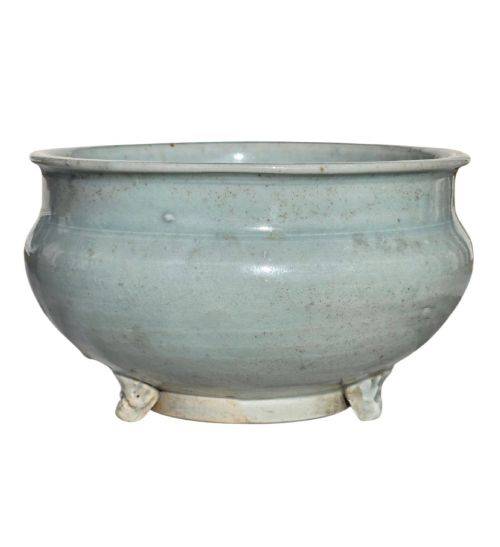
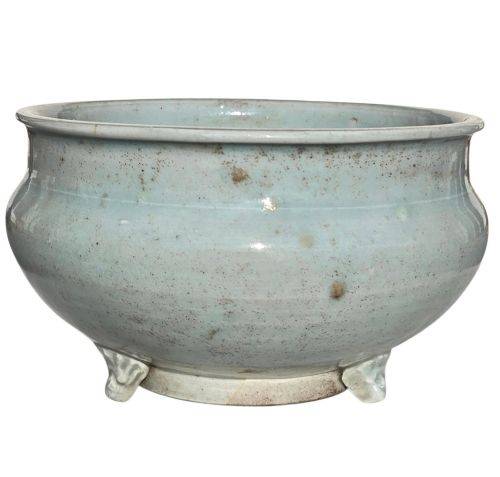
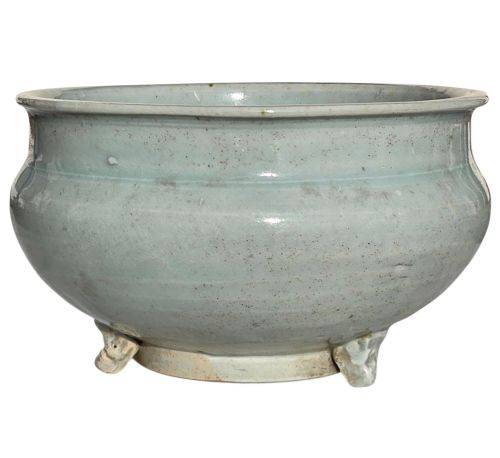
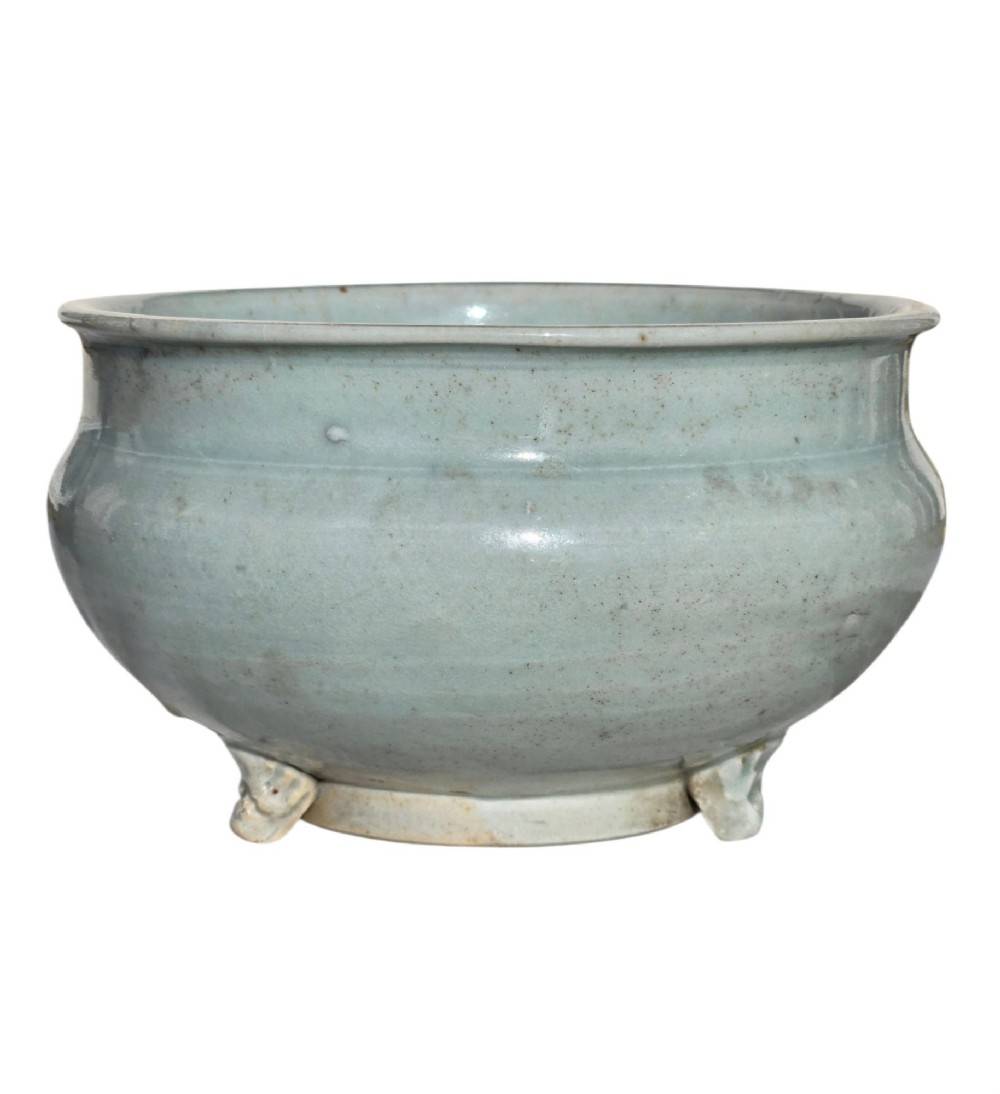
Overview & Form: An exceptionally heavy and robustly potted Chinese pale blue-glazed porcelain censer dating to the Early Ming Dynasty, masterfully crafted in porcelain to imitate classical archaic bronze ritual vessels. Measuring 15.5 cm in width, standing 11 cm in height, and possessing a commanding weight of 812 grams, it presents a dense, tactile quality that instantly separates it from later, lighter production.
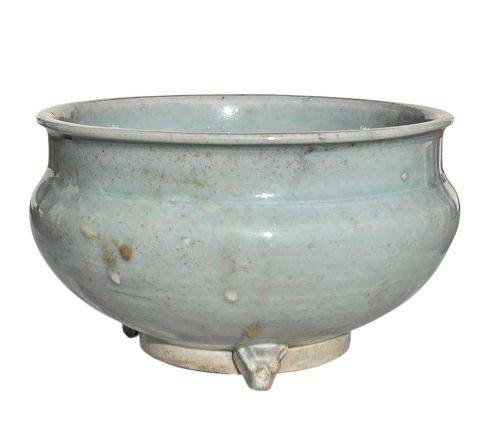
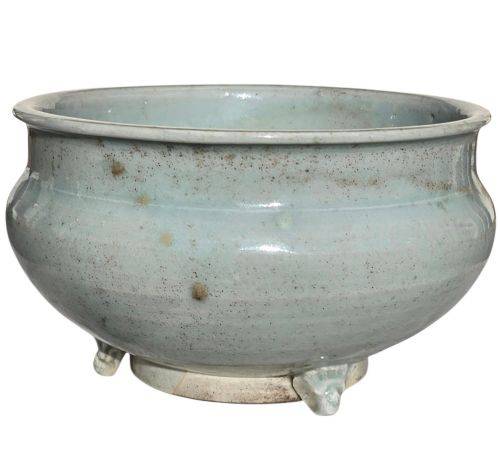
Exterior Glaze: The exterior is enveloped in a lustrous, translucent pale blue glaze that displays organic character. It is punctuated by natural iron-spotting, kiln ash pooling, and subtle micro-bubbles formed during high-temperature provincial reduction firing. The glaze thins gracefully over the raised bow-string shoulder fillet, allowing the pale body tone to softly emerge.
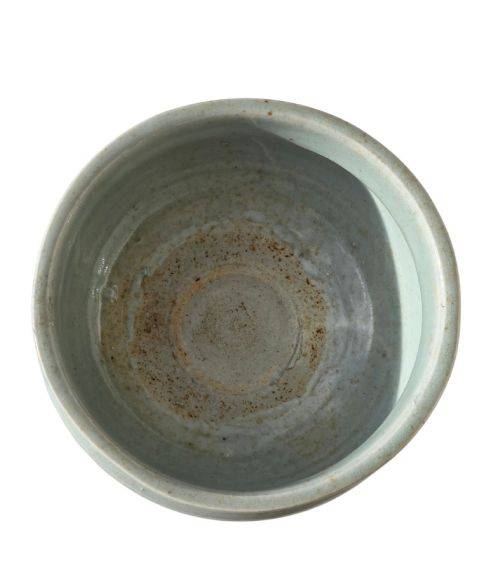
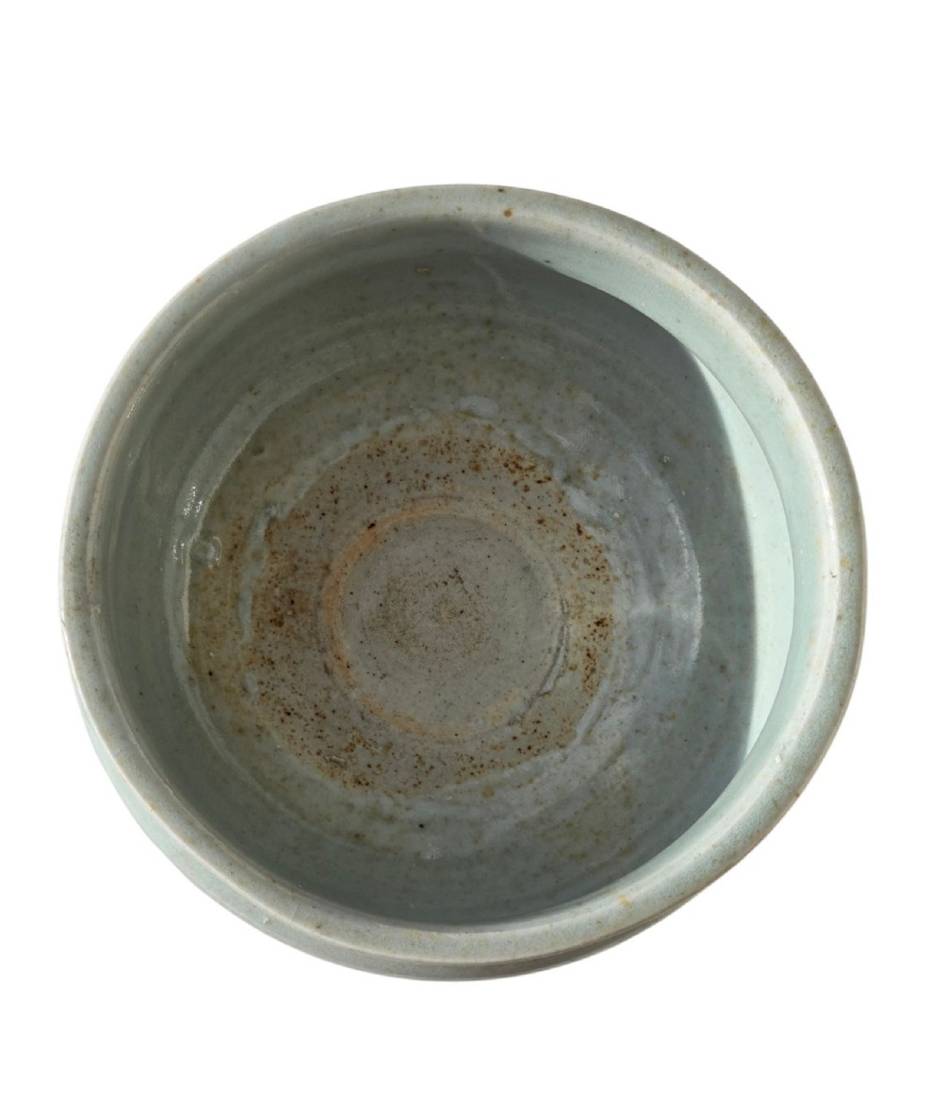
Interior Glaze: The interior reflects a pooling of the same heavy, cooling pale blue glaze, which gathers thickly in the cavetto. It exhibits natural firing inconsistencies and iron-rich speckling across the recessed center, showcasing the authentic interior finish of a 15th-century utility vessel.
Feet: The vessel is elevated firmly upon three slender mask-head feet, each crisply and vigorously molded with stylized zoomorphic features. These feet anchor the globular body with architectural strength, faithfully replicating the functional legs of ancient bronze prototypes.
Base & Concentric Rings: The unglazed flat base reveals a coarse, buff-firing biscuit body characteristic of early southern kiln production. It features prominent, deeply incised concentric throwing rings radiating from the center, alongside authentic kiln grit and iron-red oxidation patches adhering to the footrim from its historic firing.
Provenance: The G.S. May Esquire Collection, London
Dating Justification (15th Century): The attribution to the Early Ming Dynasty is justified by a combination of diagnostic physical markers: the heavy, unrefined density of the paste (812g at 15.5cm), the raw unglazed base with its raw throwing striations rather than a finished glazed foot, the natural iron-freckled pale blue glaze reminiscent of early transitional monochromes, and the archaic mask-head tripod morphology which ceased to be produced with this rustic integrity in later imperial periods.
Details
- Category
- Chinese Porcelain
- Period
- Pre 16th Century
- Materials
- Porcelain
- Dimensions
- Height 11cm (4.33") Width 15.5cm (6.10")
- Provenance
- The G.S. May Esquire Collection, London
- Reference
- SA1238402
To enquire about this piece, call +44 7889 139 677 or email info@sandbanksantiques.com. Private viewings by appointment. Worldwide delivery.